
Blockudoku®: Block Puzzle Game
EasybrainPuzzle
4.632.78K Reviews
- Version
- 3.24.0
- Installs
- 100.00M
- Age Rating
- Everyone
Screenshots

Our Review of Blockudoku®: Block Puzzle Game
 Analysis by Appyee
I like puzzle games that make me think without demanding a long setup, and Blockudoku® fits that role well. Its appeal is the push and pull between a simple placement choice and the longer-term shape of the board: a move can clear space now, but it can also leave an awkward gap that limits what I can do next. That makes it a good pick for short, self-paced sessions, though it is less suitable if you want a story, a finish line, or a puzzle with one carefully authored solution.
A familiar grid with a different kind of pressure
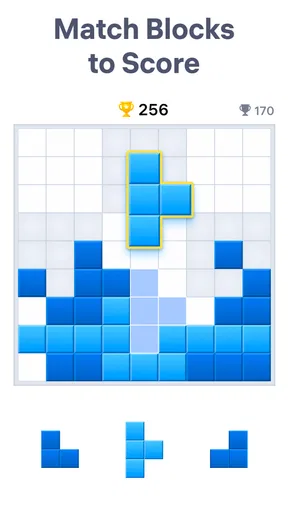
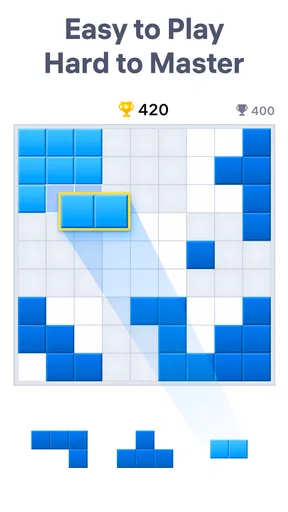
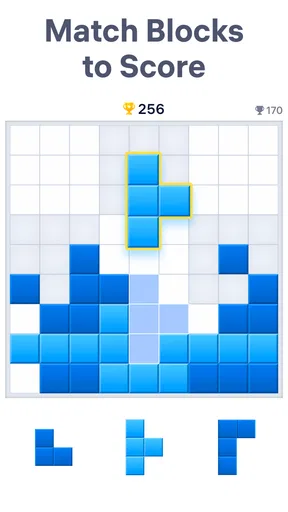
The basic idea is easy to grasp: place blocks on a 9-by-9 board, aiming to complete rows, columns, and squares so they disappear. The Sudoku influence comes from the grid and those square clears, rather than number clues or arithmetic. Compared with classic Sudoku, I spend less time deducing a single correct answer and more time judging which placement keeps the board workable. Compared with a falling-block game, there is no rush to react to pieces dropping; the tension comes from choosing well among the pieces available.
That distinction matters. A quick move may clear a line but split the remaining open spaces into pockets that do not fit the shapes I need. I have learned to look beyond the immediate clear and ask whether the next pieces will still have somewhere sensible to go. Keeping flexible space is often more useful than chasing every possible clear, especially when the board is already crowded.
Useful habits for longer runs
When I want to improve a run, I take a moment to inspect all the available shapes before placing the first one. A small block can fit in many places, so using it immediately may be less valuable than placing a less flexible shape while the board still has room. I also try not to leave isolated single-cell gaps: they can look harmless, but later pieces may not be able to fill them, and the empty cells around them can become difficult to use.
Clearing several lines or squares at once can feel satisfying, but setting up a large clear is a gamble if it blocks practical placements along the way. I prefer a steady board with a few useful options over a clever-looking plan that depends on one exact shape arriving at the right moment. That is a useful approach for anyone who tends to lose a run by focusing on a big combo instead of keeping the board playable.
Where it fits into an ordinary day
This is the sort of game I can open while waiting for a drink, winding down between tasks, or taking a quiet break. Because there is no countdown in the mode described here, I can pause to consider a placement instead of racing a timer. It also works when I want something more involving than a very simple tap game but do not have the time or attention for a long campaign.
There is a trade-off: a run can stretch longer than intended when I am trying to beat my personal best. If I need a firm stopping point, a puzzle with a fixed number of clues or a short, clearly bounded round may suit me better. Blockudoku’s open-ended score chase is most enjoyable when I am happy to stop after a natural break rather than expecting each session to have a defined ending.
Who should look elsewhere
I would recommend it to people who enjoy spatial planning, score chasing, and puzzles that are easy to learn but leave room to refine a strategy. It is also a sensible choice for someone who likes Sudoku’s tidy grid but would rather make placement decisions than solve number logic. If you want calm play without a clock, the unhurried pace is a real strength.
I would steer away from it if you want a narrative, varied environments, or a guaranteed solvable puzzle with a clear conclusion. Its core loop stays centered on fitting shapes and managing space, so players who tire quickly of repeating a central mechanic may find it gets familiar. And if competition makes a casual break stressful, the leaderboard is easy to ignore; there is no need to turn every session into a comparison.
First Impressions: The Look and Feel
Firing up Blockudoku® for the first time, I was immediately drawn to its clean and minimalist design. The interface is super intuitive, making it easy to dive right into the gameplay without any fuss. The color palette is easy on the eyes, which is a blessing since I found myself spending quite a bit of time playing without even realizing it.
Gameplay Mechanics: The Heart of the Game
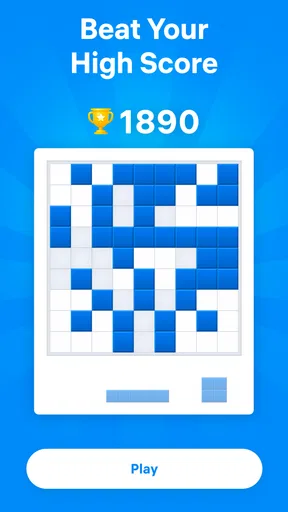
Here’s where the magic happens. The game combines elements of Sudoku with block puzzles, where your main goal is to fit blocks on a 9x9 grid to clear lines and squares. It’s a bit like Tetris meeting Sudoku, and it’s as addictive as it sounds. The real trick lies in planning your moves carefully to avoid running out of space, and trust me, it’s easier said than done!
What keeps me coming back is the endless mode. There’s no time constraint, so I can play at my own pace, which is perfect for unwinding after a hectic day. Plus, the game keeps track of your high scores, so there’s always that personal challenge to beat your last score.
Challenges and Daily Puzzles: Keeping It Fresh
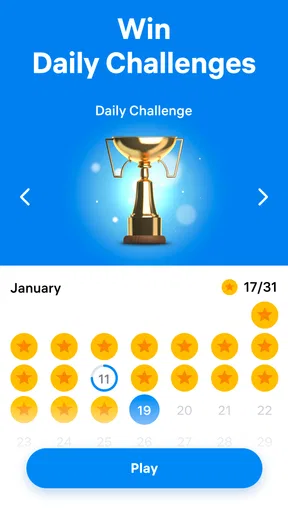
If you’re like me and thrive on a bit of variety, you’ll love the daily challenges. Every day, there’s a new puzzle waiting to be solved. It adds a fresh twist to the game and keeps things from getting monotonous. I find myself eagerly checking in daily just to see what new challenge awaits.
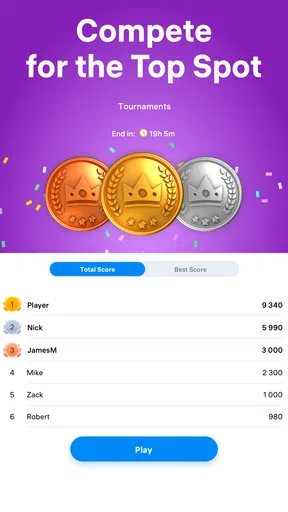
The competitive spirit in me also appreciates the leaderboard feature. You can see how you stack up against other players worldwide, which is a neat touch for those who like a little friendly competition.
Audio and Visuals: The Subtle Touches
While the gameplay is the star of the show, the subtle audio and visual cues enhance the experience. The sound effects are satisfying, especially the little chime when you clear a line or square. It’s these small details that make the game feel polished and well-thought-out.
Visuals-wise, the blocks are distinct and easy to recognize, which helps when you’re strategizing your next move. Everything feels crisp and responsive, which is exactly what you want in a puzzle game.
Why You Should Try It
If you’re on the lookout for a game that’s both engaging and relaxing, Blockudoku® is definitely worth a download. It’s the kind of game that you can pick up for a few minutes or get lost in for hours. Whether you’re a puzzle enthusiast or someone looking for a casual game to pass the time, this one ticks all the boxes.
With its blend of strategy and simplicity, Blockudoku® offers a gaming experience that’s hard to beat. And the best part? It’s free to download, with in-app purchases available if you want to unlock additional features.
So, next time you’re scrolling through the app store, give Blockudoku® a shot. Who knows, it might just become your new favorite game too!
What to expect before installing
Easybrain’s puzzle game is free to play and rated for Everyone, making it an approachable option for a shared household device as well as for solo breaks. It has been available since November 22, 2019, and its current version is 3.24.0, with Android 8.0 as the minimum operating system. The scale of its audience is substantial: it has passed 100 million installs, alongside a 4.6 average from 1.3 million ratings and 33,000 written reviews. Those figures suggest broad appeal, but the deciding question is still whether you enjoy the repeated spatial decisions at its center.
There are in-app purchases, with items priced at $14.99 each. I would approach those as optional spending rather than a requirement to understand the basic puzzle loop: the free entry point is part of the game’s appeal. Before buying anything, I would check what the particular item offers and whether it addresses a real need in the way I play. A purchase is unlikely to change the central fact that success depends on fitting shapes into limited space.
Small choices that make a session smoother
One practical habit is to decide what kind of session I want before opening the game. If I have only a moment, I treat the run as a quick mental reset and avoid getting attached to a target score. If I have more time, I play more deliberately, checking whether a placement preserves open lanes and room for larger shapes. This keeps the same simple loop useful in different situations without pretending that every round needs to become a serious challenge.
I also find it helpful to notice when I am making moves just to clear something immediately. A clear is rewarding, but it is not automatically the best move if it fragments the board. When a placement leaves several different shapes with plausible homes, I feel more in control than when I have emptied a line but created tight, disconnected spaces. This is not a guaranteed route to a record; it is a way to make choices that are easier to recover from.
The daily puzzles offer a useful change of rhythm alongside the open-ended score pursuit. I can choose the more structured-feeling challenge when I want a reason to return, then use the endless mode when I simply want to keep placing pieces. That variety helps, although it does not transform the game into a collection of unrelated puzzle types. If I need a completely different kind of mental exercise, I would pick another game rather than expect this one to reinvent itself.
How it compares with other puzzle choices
Against a conventional Sudoku app, this asks for visual planning instead of number-based deduction. I would choose Sudoku when I want to work through clues toward a solution; I choose this when I want flexible moves and a changing board. Against a falling-block game, the absence of a countdown makes it more reflective, but the long-term pressure of a crowded grid remains. Neither style is universally better: the right choice depends on whether I want to solve, react, or manage space at my own pace.
It also differs from short level-based puzzlers, where each stage has a defined goal and a clear sense of completion. Here, a high score gives the run direction, but it may not provide the same satisfying endpoint as finishing a level. That open-endedness is a strength for repeat play and a weakness for anyone who prefers compact sessions with a natural finish. I would choose a level-based alternative for a commute where I need to stop at a predictable point; I would choose this for an unhurried wait.
My verdict on its staying power
The most convincing reason to try it is the balance between immediate accessibility and decisions that reward patience. I can understand the board quickly, yet I still have to think about how today’s placement affects the next few choices. The trade-off is that the basic activity remains consistent: the daily puzzles and leaderboard add reasons to return, but they will not satisfy someone looking for a changing cast of mechanics or a story-driven progression.
My recommendation is straightforward: give it a try if you enjoy grid puzzles, want a no-rush option, or like measuring your own improvement through a score. Skip it if you need a finite objective, dislike open-ended repetition, or prefer logic puzzles with one deducible answer. For me, it works best as a compact, thoughtful break rather than a game I would rely on for variety all evening. That is a clear niche, and within it the design makes sense.
Verdict
Strengths of Blockudoku®: Block Puzzle Game
- Engaging blend of Sudoku and block puzzles.
- Simple controls suitable for all ages.
- Offline mode available for on-the-go play.
- Visually appealing with soothing colors.
- Daily challenges keep gameplay fresh.
Limitations of Blockudoku®: Block Puzzle Game
- Ads can be intrusive during gameplay.
- No multiplayer or social features.
- Limited themes and customization options.
- Higher levels can feel repetitive.
- In-app purchases for hints can add up.
Other Releases by Easybrain
View All
Art Puzzle - Puzzle Games
Puzzle4.8

Arrow Puzzle: Tap Puzzle Games
Puzzle4.8

Sudoku.com - Sudoku Puzzle
Puzzle4.7

Jigsaw Puzzles - Puzzle Games
Puzzle4.8
Similar Picks in This Category
View All
Block Blast!
HungryStudio4.8

Braindom: Brain Games Test
Lahana Game Studio4.6

AMAZE!
CrazyLabs LTD4.6

Sudoku - Classic Sudoku Puzzle
Oakever Games4.7
Art Puzzle - Puzzle Games
Easybrain4.8

Amaze GO!
Oakever Games4.9
Frequently Asked Questions
What is Blockudoku® and how does it work?
Blockudoku® is a unique blend of Sudoku and block puzzle games. The objective is to fit blocks into a 9x9 grid, similar to Sudoku, while clearing lines and 3x3 squares. The game ends when no more blocks can be placed on the board. It’s a strategic puzzle game that challenges your logic and problem-solving skills.
Is Blockudoku® suitable for all ages?
Yes, Blockudoku® is designed to be accessible and enjoyable for players of all ages. Its intuitive gameplay makes it easy for younger players to understand, while its challenging puzzles keep adults engaged. There is no inappropriate content, making it family-friendly and a great choice for both kids and adults.
Does Blockudoku® offer in-game purchases?
Blockudoku® is free to download and play, but it does offer in-game purchases. These purchases can enhance your gaming experience by providing additional features or removing ads. While optional, these purchases can be helpful for players looking to explore more advanced gameplay options or enjoy an ad-free environment.
Can I play Blockudoku® offline?
Yes, Blockudoku® can be played offline, making it a great option for entertainment without the need for an internet connection. This feature allows you to enjoy the game anywhere, whether you’re on a plane, commuting, or in areas with limited connectivity, ensuring uninterrupted gaming sessions.
How does Blockudoku® enhance cognitive skills?
Blockudoku® is designed to engage your brain by combining elements of strategy, logic, and spatial awareness. By solving puzzles and fitting blocks into the grid, players improve their problem-solving abilities and enhance their concentration. Regular play can also boost memory retention and mental agility, making it both fun and beneficial.
Play our best games!


